
In stock
Ultrasonic
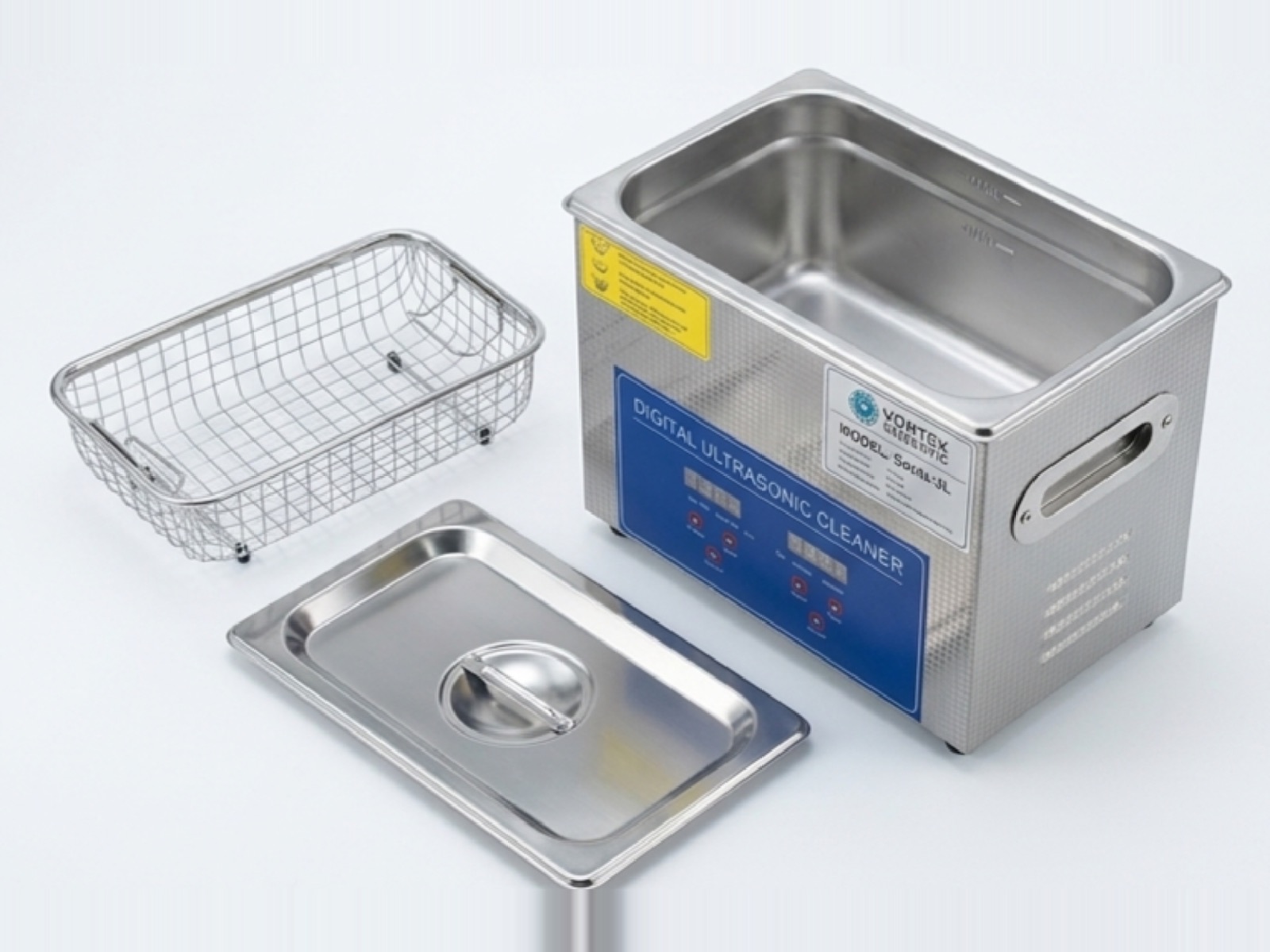
Vortex Sonix 3L
3 litre heated digital ultrasonic cleaner — 40 kHz cavitation that reaches inside settings a brush cannot.
Tank capacity3 L
USD 189
Gold-industry machinery for jewellers and bullion traders
info@vortexscientific.comRange
Heated ultrasonic tanks that lift polishing compound, skin oils and bench dust out of settings a brush cannot reach.
1 machine
Ultrasonic
3 litre heated digital ultrasonic cleaner — 40 kHz cavitation that reaches inside settings a brush cannot.
Tank capacity3 L
An ultrasonic cleaner does one thing a brush cannot: it reaches inside a setting. The transducer under the tank drives the solution at a frequency high enough to form microscopic bubbles, and those bubbles collapse against every surface they touch — including the underside of a stone, the inside of a channel, and the gap between a claw and a girdle. That collapse is what lifts polishing compound, skin oils and bench dust out of the places that make a finished piece look dull.
Size the tank to the largest thing you actually clean, plus the basket. A 2–3 litre tank takes a full tray of rings, a watch bracelet or several chains at once, and suits almost every retail bench and small workshop. Going bigger is not free: a larger tank needs more power to drive the same cavitation intensity, so a big tank with an underpowered transducer cleans worse than a small one that is properly matched.
40 kHz is the jewellery frequency. Lower frequencies — 28 kHz and below — produce larger, more violent bubbles that clean heavy industrial parts quickly but are too aggressive for fine work and for stones. At 40 kHz the cavitation is finer and more even, which is what you want around claws, filigree and engraving. If a supplier offers you a 28 kHz machine for a jewellery bench, ask why.
A heater changes the result more than another 20 watts will. Warm solution cuts grease far better than cold. Look for a unit that will hold 50–60 °C and let you set it, and expect the first cycle from cold to take a few minutes to come up to temperature.
Then the things that decide whether it lasts. A 304 stainless tank rather than a thin pressed one. A digital timer instead of a spring dial, so a cycle is repeatable. A degas function if you mix fresh solution often. And a basket — this matters more than it sounds, because work resting directly on the tank floor sits on the transducer, which damages both the piece and the tank.
Finally, know what must never go in one. Emeralds and any fracture-filled or oiled stone, opals, pearls, turquoise, coral, amber and tanzanite can all be damaged or lose their filling. So can a stone that is already loose in its setting: cavitation will finish the job. Clean those by hand and keep the tank for metal, diamonds and hard corundum.
Emeralds and any fracture-filled or oiled stone, opals, pearls, turquoise, coral, amber and tanzanite. Also anything with a stone that is already loose, because cavitation will shake it out. Clean those by hand and keep the tank for metal, diamonds and hard corundum such as ruby and sapphire.
40 kHz. It produces fine, even cavitation that cleans around claws and engraving without being aggressive enough to damage detail. Lower frequencies like 28 kHz are designed for heavy industrial parts and are the wrong tool for a jewellery bench.
For anything greasy, yes. Warm solution removes polishing compound and skin oils far more effectively than cold, and a heated unit typically holds 50–60 °C. Expect a few minutes for the first cycle to come up to temperature from cold.
A proper ammoniated jewellery concentrate diluted as directed, or warm water with a little detergent for light work. Never put flammable solvents in an ultrasonic tank — the cavitation and the heater together make that genuinely dangerous.
Three to five minutes suits most jewellery. Longer is rarely better; if a piece is not clean after a second cycle the problem is usually the solution temperature or a deposit that needs steam or a brush instead.
The tank floor is directly above the transducer. Work resting on it takes the full force of the vibration, which can crack the tank and damage the piece. The basket holds work in the body of the solution where the cleaning actually happens.
Talk to us
Tell us your shop size, your power supply and what you melt or test in a day. We will tell you which machine fits — including when the answer is the cheaper one.
Other ranges: Gold Testing Machines · Gold Melting Furnaces · Laser Welding Machines