8 min read
How XRF gold testing works
A plain-language explanation of X-ray fluorescence for jewellers — what the machine actually measures, why it cannot be fooled by acid tricks but can be fooled by plating, and how to read a result you are about to pay against.
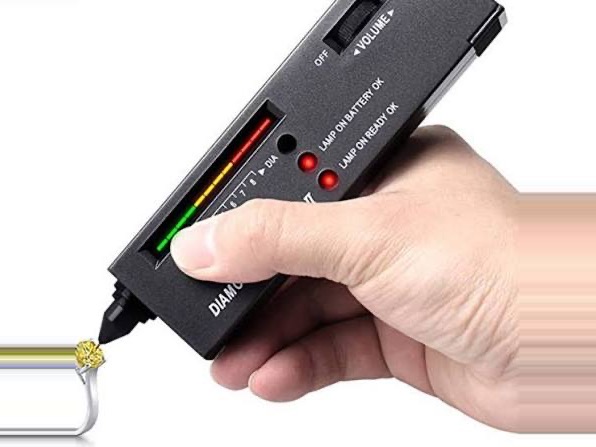
Every jeweller has watched a customer's face while a streak of gold is drawn on a touchstone and a drop of acid is placed on it. It works, it is cheap, and it has two problems: it damages the piece, and it puts the item into a band rather than telling you what is in it. XRF replaced it in serious shops for both reasons.
This guide explains what the machine is actually doing, so that when you read a number off the screen you know what you are trusting and where it can mislead you.
What the machine does
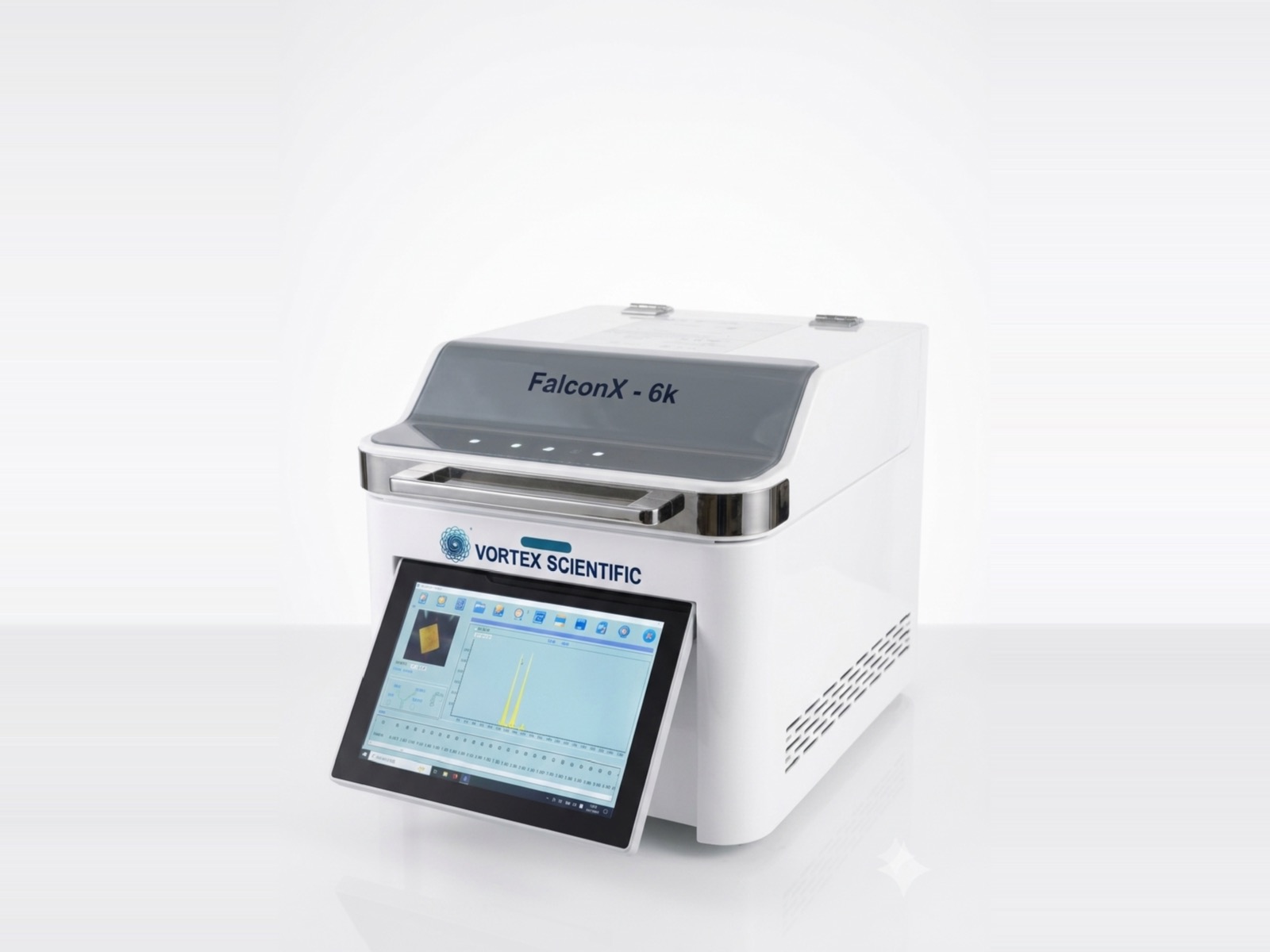
Inside the analyser is a small X-ray tube. When you close the chamber and start a measurement, the tube fires low-energy X-rays at the item.
Those X-rays knock electrons out of the inner shells of the atoms in the metal. An atom with a hole in an inner shell is unstable, so an electron from an outer shell immediately drops down to fill it. Dropping to a lower-energy position releases the difference as a photon of X-ray light.
Here is the useful part: the energy of that emitted photon is fixed by the element it came from. Gold releases a photon at one specific energy, silver at another, copper at another, zinc at another. Nothing else in nature produces gold's energy signature. The atom is, in effect, announcing what it is.
The detector counts these photons and sorts them by energy. After a few seconds the machine has a spectrum: a chart with a peak at gold's energy, a peak at copper's, a peak at silver's, and so on. The height of each peak reflects how much of that element is present. The software converts those proportions into a percentage composition, and from the gold percentage into a karat figure.
That is the whole technique. It is called fluorescence because the material is re-emitting light of its own after being illuminated — the same word, and the same underlying idea, as a fluorescent dye glowing under a UV lamp.
What this means in practice
Nothing is removed from the item. The X-rays go in and photons come out. The piece is returned exactly as it arrived. This is why a customer will let you test a bangle they intend to keep, and why you can test a finished, polished item you are about to resell.
You get composition, not just a verdict. Acid testing tells you the streak survived 18K acid and dissolved in 22K acid. XRF tells you the item is 76.2% gold, 15.1% silver, 8.7% copper. That is a far more useful number if you are melting the piece, if you are pricing it against a refiner's terms, or if you are trying to work out why a batch of alloy is behaving oddly at the bench.
It is fast enough to use in front of a customer. A karat sort takes seconds. That changes the buy-back conversation: the customer watches the reading appear rather than watching you make a judgement.
The limitation you must understand
XRF reads the surface.
The X-rays penetrate only a few microns into gold. The photons coming back out are from that thin surface layer. For a solid, homogeneous item, that layer is representative of the whole piece and the reading is the composition of the item.
For a plated item, it is not. A heavy gold plating over brass will present to the detector exactly as a solid gold surface presents, because as far as the physics is concerned, the surface is gold. The analyser is not being deceived by a clever fake; it is correctly reporting what is in front of it, and what is in front of it is gold.
This applies to every XRF instrument sold, at every price. Any supplier who tells you their machine cannot be fooled by plating is either misunderstanding the technique or overselling it. What a good machine can do is give you clues — an unusual composition, a nickel or copper signal from an underlayer bleeding through thin plating — but clues are not certainty.
The two standard defences are:
- Density. Weigh the item in air, weigh it suspended in water, and compute density. Gold is dense in a way brass and silver are not, and a gold-plated base-metal item will fail a density check badly. This costs almost nothing and catches what XRF cannot.
- Break the surface. On scrap you intend to melt, file a small window and test into the exposed metal. On an item you are buying to resell intact, you cannot do this — which is exactly why the density check matters.
A shop that combines XRF with a density check on anything unusual or high value has a genuinely robust buying process. A shop relying on XRF alone does not.
Reading a result properly
Two readings of the same item will not be identical. XRF counts photons, and counting is statistical: measure for a short time and you collect fewer photons and get more scatter. This is normal and expected. If you need a number you are going to defend — on bullion, on a large purchase — take a longer count.
Where you aim matters. The measurement spot is small. Aim at a solder join and you will read the solder. Aim across a stone setting and the stone will affect the result. Aim at a heavily worn or heavily polished area and you may be reading a surface that has been enriched or depleted by finishing. Use the aiming camera, choose clean bare metal — a shank, a clasp, the inside of a band — and be consistent about it.
Karat and purity are different questions. A machine that sorts jewellery into karat bands well may not be precise enough to distinguish 995 from 999 on a bar. Those are separate specifications and should be quoted separately. Ask your supplier for both.
Rhodium plating on white gold will read. So will a heavy polish compound residue, and so will surface dirt. Clean the item before testing anything that matters.
Choosing between detector types
The one specification that changes what the machine can do is the detector.
A silicon drift detector (SDD) separates the energy peaks sharply. Elements that sit close together in the spectrum stay distinguishable, readings stabilise in a few seconds, and precision on high-purity material is good enough for bullion work.
A proportional counter costs considerably less and works on the same principle, but resolves peaks more coarsely and collects signal more slowly. For sorting scrap and finished jewellery into karat bands, it is entirely adequate. For grading fine gold, it is not.
The honest way to choose is by what you pay against. If you hand cash across a counter based on a karat band, a proportional counter is a reasonable buy. If you settle high-purity material where a part per thousand is real money, buy the SDD and do not look back.
Safety, briefly
A benchtop analyser is a tube-based instrument, not a radioactive source. When it is off, it emits nothing. The chamber is shielded and interlocked so the tube cannot fire with the lid open. Operated as designed, it is appropriate for a retail counter.
Keep the unit's safety documentation with the machine, do not defeat the interlock, and have the shielding checked if the chamber is ever damaged.
Before you buy
Ask any supplier these five questions and compare the answers:
- What detector is fitted — SDD or proportional counter?
- What is the stated accuracy across the karat range, and separately at 999?
- How long is a typical reading, at each of those precisions?
- Who calibrates and services the unit, how long is it away, and where does it go?
- What does a tube or detector replacement cost, and how long does it take?
The last two decide what happens in year three. A machine that has to cross a border for a routine calibration becomes an expensive ornament.
Still deciding?
Send us your shop size, your power supply and what you handle in a day. We will tell you which machine fits.